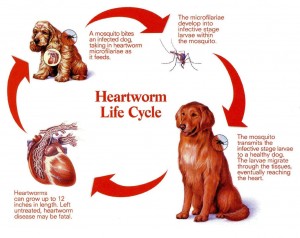
 Have you heard of Heartworm Disease? Unfortunately, there are some who are still unaware of this deadly disease and how our pets can get it. Heartworm disease is a serious and potentially fatal condition caused by parasitic worms (Dirofilaria Immitis) living in the arteries of the lungs and occasionally in the right side of the hearts of dogs, cats, and other species of mammals. The culprit? Mosquitoes! These annoying insects spread heartworm, and just one bite can infect your pet. ALL dogs, regardless of breed, age, gender, or living environment are susceptible to heartworm disease. Indoor, as well as outdoor, cats are also at risk for infection. “Heartworm disease is diagnosed frequently in pets that spend most of their time indoors”, per Dr. Whitney Whitford, practice owner at Animal Medical Center of Lehigh Acres. Dr Whitney graduated with honors from University of Florida in 1995. She is also on Wink News Pet Connection every Tuesday morning, featuring an available adoptee from The Gulf Coast Humane Society.
The heartworm infection starts when an infected mosquito takes a blood meal from your dog or cat. Heartworm larvae are then deposited onto the skin, and the larvae make their way into the muscle tissue by the puncture wound left by the mosquito. Two months post infection, larvae molt into immature adults and find their way to the blood stream. They are then transported toward the heart and lungs of your pet. As early as four months post initial infection, the heartworms, about 1- 1.5 inches in length, have all arrived in the small pulmonary blood vessels. Immature heartworms start developing rapidly at this point, growing into the larger pulmonary blood vessels, eventually pushing into the pulmonary artery of the heart. An inflammatory process begins, affecting the lungs, surrounding blood vessels and tissue. Eventually this leads to complete pathology of the lungs and heart. “Symptoms of heartworm disease range from asymptomatic, meaning no clinical signs, to mild, an occasional cough or decrease in physical activity. Severe symptoms of heartworm disease can include persistent cough, difficulty in breathing, or sudden death. X-rays can show an enlarged pulmonary artery and an enlarged right ventricle of the heart. Bloodwork can show anemia, decreased platelets and protein in the urine”, Dr. Charles Whitford, practice owner of AMC. Dr. Charley has been practicing veterinary medicine for almost 20 years, and has special interest in preventative medicine and orthopedic surgery. Seven to nine months after that very first mosquito bite, heartworms are in the breeding stage, 4 to 12 inches in length. Female heartworms produce microfilaria, which are ready to be ingested by new mosquitoes, continuing this vicious cycle. “Heartworm disease is the most under appreciated, severe disease process that our pets can face. The worst part is that it’s completely preventable!” says Marie Kay, Certified Veterinary Technician and Lead Surgical Technician at AMC.
If left untreated, heartworm disease can be fatal for your furry family member. Many heartworm positive pets die within the first two years of being infected from heart, lung, blood disorders, and kidney or liver failure. Treatment is available for dogs, but its expensive, ranging from 600-$1,200 dollars, depending on the severity of the disease and size of the pet. There is no safe treatment for a heartworm positive cat. Even with treatment, some dogs will die from complications.
Fortunately there is great news! Heartworm disease is completely preventable. “Once a patient has heartworm disease there is a high risk of serious complications, even with treatment. Prevention is the best!“ states Dr. Whitney Whitford. Heartworm prevention medication for dogs and cats are available at your veterinarian only, and come in a monthly chewable, topical, or a six-month injection. Giving heartworm preventative all year is very important for the health of your pet due to the prevalence of mosquitoes and other parasites in our humid, bug filled Florida. In addition to heartworms, many preventions treat for fleas and intestinal parasites, such as roundworms and hookworms. These medications should only be given after your veterinarian confirms a negative Heartworm Test, a simple 10–minute blood test performed in your veterinary office.
It’s important to remember that an ounce of prevention is worth a pound of cure when thinking of heartworm disease. If you would like more information on heartworm disease and would like us to help keep your pet safe, give us at Animal Medical Center of Lehigh Acres a call at (239) 369-0555 or stop by our hospital at 2920 Lee Boulevard, Lehigh Acres.
-Amanda Pruitt
Social Media Coordinator/Receptionist
The Animal Medical Center of Lehigh Acres is an AAHA Accredited Animal Hospital, proudly serving Lehigh Acres since 1986. Our commitment to excellence keeps us on the leading edge of veterinary medicine. AMC focuses on continuous improvement and education to assure we can offer the quality and range of services you expect and deserve for your pet.