By Paul Waldmiller
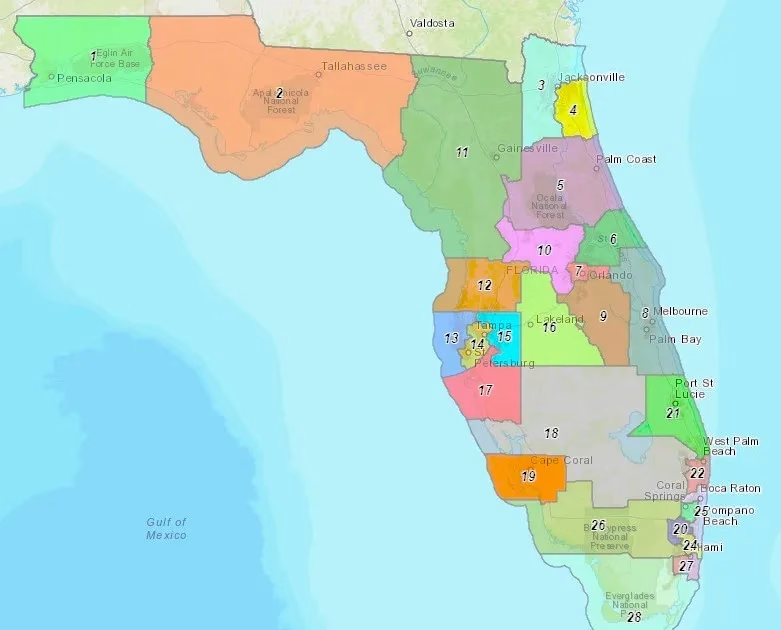
Did you know that Governor Ron DeSantis has declared that our state was shortchanged by one congressional seat following the 2020 Census?
DeSantis specifically argues that Florida was undercount and by doing so, it cost Florida both additional representation in Congress and an extra Electoral College vote. He also claims the official count underestimated Florida’s population growth, which he says should have earned the state at least one more seat beyond the 28 it currently holds. DeSantis cited the U.S. Census Bureau’s Post-Enumeration Survey and stated that even the Biden administration acknowledged Florida was undercounted.
DeSantis and Attorney General James Uthmeier are urging the Trump administration to address the discrepancy and award Florida the additional seat it deserves. DeSantis has suggested that the 2020 Census results were politically biased, noting that Republican-led states like Florida were undercounted while Democratic-led states received favorable adjustments. This new revelation from DeSantis comes shortly after President Trump announced he wants a new Census due to wrongly counted Illegal Aliens throughout the U.S.
Some so-called experts argue that Florida cannot legally gain an additional congressional seat without a new national census, as the current apportionment is fixed until the next decennial count in 2030. Palm Beach Atlantic University history professor Dr. James Todd explained that unless Congress orders a new census, Florida is capped at 28 seats, and any redistricting would merely involve redrawing existing boundaries rather than increasing representation.
Despite this, Like Donald Trump, DeSantis is also pushing for mid-decade redistricting, potentially following Texas’s example of revising congressional maps without adding seats—a move critics label as gerrymandering. Such a move in Florida would likely trigger legal challenges, particularly concerning the state’s Fair District Amendments designed to protect minority voting power. The current congressional map was previously litigated in 2022, and further changes could reignite constitutional disputes.