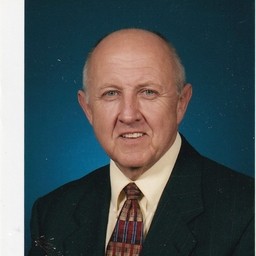
Written by Van Yandell
Matthew 6: 19-21 “Lay not up for yourselves treasures upon earth, where moth and rust doth corrupt, and where thieves break through and steal. But lay up for yourselves treasures in heaven, where neither moth nor rust doth corrupt, and where thieves do not break through nor steal. For where your treasure is, there will your heart be also.”
Charles Spurgeon said “A good character is the best tombstone. Those who loved you and were helped by you will remember you when forget-me-nots have withered. Carve your name on hearts, not on marble.”
The study of history is fascinating in that it is about people. Whether from the 1990’s or 4000 BCE, the people make history interesting.
To realize those individuals, so many years ago, actually existed captures the curiosity of many. They loved, they hated, they fought and experienced all the same emotions, trials and tribulations people of today are subjected to.
“Many find the study of the history of their families as compelling. Commonly known as genealogy, the study can be beneficial at such things as a sense of purpose, a deeper personal identity, mental stimulation, medical knowledge, family connections, and social benefits.” Copied
An internet article claims them as benefits but personally, I’m not convinced. To know however, one’s family has a propensity toward a certain medical condition could be helpful.
Wife Margie is such a one and places we occasionally visit are graveyards. I’m about as interested as a gerbil at a snake party but I sometimes find the ages of the tombstones a point of interest.
We have found tombstones in America back to the early 1700’s and in Europe, much farther back. In 2019 we visited graveyards in Scotland and Ireland with dates back to the 1500’s. Many would have undoubtedly been older but were worn unreadable.
Grave markers range from a simple sandstone rock found down on the creek to elaborate granite edifices that in today’s environment of inflation would cost tens of thousands of dollars.
Dying has become big business and people will pay to be recognized and remembered long after their departure from this earth. Vanity is alive and well in the twenty-first century and it shows in grave markers. People are willing to pay the price to be remembered.
To visit a cemetery with the thousands of granite markers is almost like going to the beach. Do we remember an individual grain of sand on the beach?
Ask yourself the question “How do I want to be remembered?” Do you want to be remembered for the amount of money you made, the amount of time you spent working or the people you hurt?” None of the above would likely apply to most of us. So the question remains, what are we erecting as our marker and epitaph?
My friend Ish once asked me, “How do you want to be remembered?” Without hesitation I answered “As a soul winner!” His response was a laugh and the words, “I already knew that!” I considered his words to be a great compliment.
The Bible teaches we are eternal beings (Romans 6: 23). I have often said to congregations, “That’s not you I’m looking at right now. What I’m seeing is your dwelling place while you are here on this earth which is actually short-term.”
Genesis 1: 27 “So God created man in his own image, in the image of God created he him; male and female created he them.” If we are spiritual beings as the Bible indicates, why would a tombstone actually be of any eternal worth? In visiting graveyards looking for ancestors, we find the lettering on most stones over 200 years old are mostly worn to the point of not being readable.
How long is 200 years in the span of eternity? It’s probably not necessary to answer that question and I’m not sure I could. Someone reading this may be remembered a thousand years from now but not likely. There aren’t many like King David, Napoleon or Alexander the Great in existence.
Would you rather be remembered as a Pope John or Jack the Ripper? Most of us will be in between those two extremes but, for a few short years we will be remembered in one way or other.
Is there anything you or I can actually do on this earth that will matter in a million years? If the Bible teaching of eternal life is actually true (Romans 6: 23 and John 3: 16), the answer to that question is simple and to the point. The imperative of telling others about the saving grace of our Jesus and His offering of eternity by a simple faith based belief in HIM, our answer is forthright and obvious; and our question is answered!
Jefferson Davis said, “If the Confederacy fails, there should be written on its tombstone: Died of a Theory.” Is our belief a theory? Certainly NOT! Truth and fact is provable and the Holy Bible proves itself from within itself. The science and prophesy that no mere mortal could have known thousands of years ago, make a statement in fact.
To tell others about Jesus is not a challenge; it is a privilege. I have ask myself, how can anyone resent being told that eternal life is possible by a simple faith based belief in Christ Jesus crucified for the remission of sin and resurrected?
Being adamant in one’s belief is admirable but not listening to reason is foolish. Why would I or anyone consider sharing the Gospel of the Lord Jesus if we did not care about people and their well-being?
Wouldn’t it be an ever-lasting experience to encounter someone in Heaven a million years from now and that person say to you, “I’m here because you told me!”
Our tombstones do not have to be made of stone. They can be made of the people we met, knew and shared our lives with.
Rosario Dawson said “You only live once. You don’t want your tombstone to read: ‘Played it Safe.”
If someone really finds it necessary to be remembered, would it not be best to be remembered for the good we may have accomplished? Helping others is good, and number one on the list of helping others is to share salvation by a crucified and resurrected Christ Jesus.
Would you rather be remembered by a rock or knowing someone’s soul is in Heaven because you told them?