City of Lakeland has leased additional office and hangar space to NOAA
The NOAA Aircraft Operations Center (AOC) will be expanded under the terms of a new 20-year lease NOAA signed today with the City of Lakeland.
Located at Lakeland Linder International Airport, AOC serves as the main base for NOAA’s current fleet of nine specialized environmental data-gathering aircraft, including the agency’s three “hurricane hunter” planes. NOAA moved into the Lakeland facility in 2017.
Under the lease terms, the City of Lakeland will expand the existing AOC facility this year from 99,000 to 156,043 square feet, including additional office and hangar space; to accommodate new aircraft NOAA is acquiring to support hurricane, coastal mapping, emergency response, and other missions.
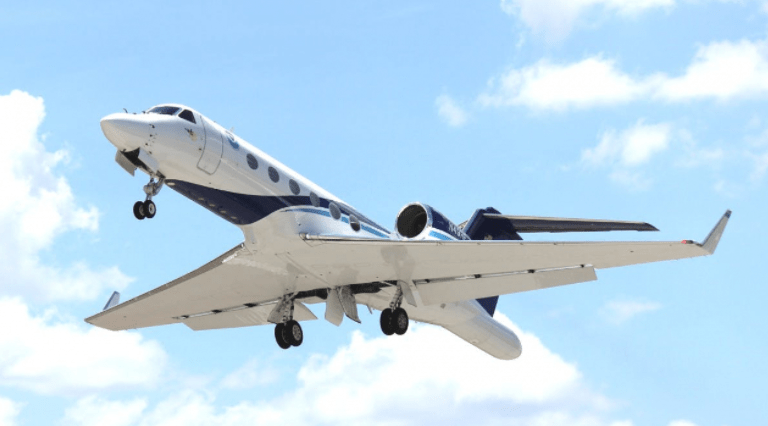
NOAA awarded a contract to Gulfstream Aerospace Corporation for the purchase of a new Gulfstream G550. This $40.7 million contract award is for the base airframe, which will be modified for use in supporting hurricane and tropical storm forecasts, atmospheric research, and other NOAA missions. NOAA expects to award additional contract line items for spare parts and airframe modifications to accommodate scientific instrumentation. The G550 will be built at Gulfstream’s factory in Savannah, Georgia. The fully instrumented aircraft is expected to join NOAA’s fleet in late 2022.
NOAA also awarded an $11.8 million contract to Textron Aviation, Inc., for the purchase of a new twin-engine Beechcraft King Air 350 CER turboprop aircraft. Once completed, the aircraft will be outfitted with remote sensing equipment that will measure the water content of snow and soil — data that is used for flood, river level, and water supply forecasts. The aircraft can also be configured to support other NOAA missions, including coastal mapping and aerial surveys of damage in communities after a storm landfall. The aircraft will be built at Textron Aviation’s factory in Wichita, Kansas, and was delivered on Dec 21, 2020.
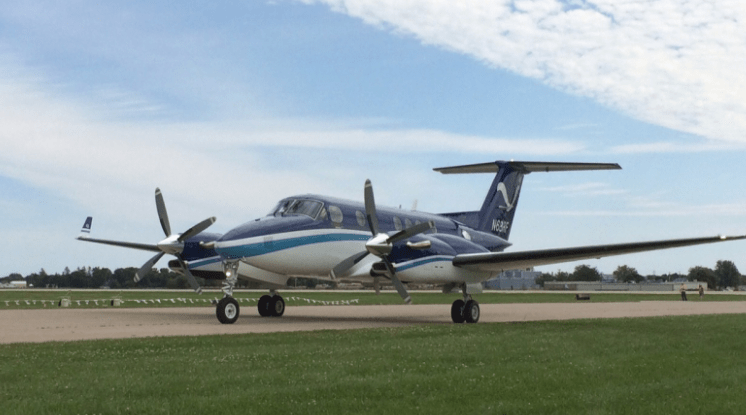
The new aircraft, designated N67RF, is outfitted with remote sensing equipment that will measure the water content of snow and soil — data that is used for flood, river level and water supply forecasts. The King Air can also be configured to support other NOAA missions, including coastal mapping and aerial surveys of damage in communities after a storm landfall.
Both the G550 and King Air 350 CER will be based at the NOAA Aircraft Operations Center in Lakeland, Florida, along with NOAA’s nine other specialized environmental data-gathering aircraft. The NOAA aircraft fleet is operated, managed and maintained by NOAA’s Office of Marine and Aviation Operations.
“With an expanded facility in Lakeland, our highly-skilled NOAA Aircraft Operations Center team and the aircraft they operate, manage and maintain will be better able to support NOAA and the nation,” said Rear Adm. Michael J. Silah, director of the NOAA Commissioned Officer Corps and NOAA Office of Marine and Aviation Operations. “This agreement also solidifies our long-term commitment to Lakeland.”
Airport Director Gene Conrad stated, “We are extremely grateful to NOAA leadership for their continued belief in Lakeland Linder International Airport. Our community and airport are proud of the mission that the NOAA AOC team performs on a year round basis, and we look forward to supporting them in that mission for the next 20 years.”
NOAA’s aircraft fleet is maintained and operated by a team of approximately 110 civilians and NOAA Corps officers. NOAA aircraft play a vital role in collecting environmental data essential to protecting lives and property, conserving and managing coastal and marine resources, and understanding weather and climate.
NOAA’s two Lockheed WP-3D Orion “Hurricane Hunters” NOAA42 / “Kermit”, NOAA43 / “Miss Piggy” play a key role in collecting data vital to tropical cyclone research and forecasting. These highly-capable four-engine turboprops also support a wide variety of atmospheric and air chemistry missions.
When it comes to hurricane forecasting, NOAA has many tools. Radar, satellites and computer models all play a role in forecasting hurricanes, but they each have their own limitations. In order to overcome these limitations, NOAA operates two Lockheed WP-3D Orion aircraft in order to conduct low-altitude data collection to fill gaps in data not available from ground based radar or satellite imagery.
NOAA’s WP-3D Orions are equipped with a unique array of scientific instrumentation, radars and recording systems for measurements of the atmosphere, the earth, and its environment. Obtained as new aircraft from the Lockheed production line in the mid-70s, these robust and well-maintained aircraft have led NOAA’s continuing efforts to monitor and study hurricanes and other severe storms, the quality of the atmosphere, oceanographic conditions, and climate trends.