MATT SMITH, Independent Journalist
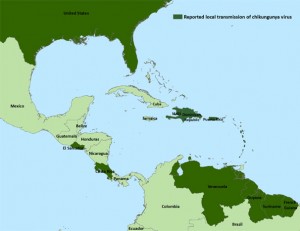
A common occurrence during the start of rainy season on the SW Area of the State is those pesky mosquitoes. They always come and right on time is our Mosquito Control District in the local area going into action with systematic spraying and special area spraying. What’s different this year is that illegal’s are not the only thing slipping across the border, a new virus has slipped across and not only into Florida but places like Haiti and Puerto Rico, where this disease is at epidemic proportions this year.
Florida (77 cases) and Puerto Rico (193 cases) have the largest reports of cases this year. All are travel related except 2 patients in Florida where they were infected in State.
On the Caribbean Island of Hispaniola, the outbreak total climbed to 306,837 suspected and confirmed cases, an increase of 42,393 from the previous week, according to a Jul 3 2014 update from the Pan American Health Organization (PAHO).
Nearly 30,000 of the new infections were reported in the Dominican Republic, while about 12,000 of them were reported in Haiti. The two countries together make up the island of Hispaniola.(2)
Most severity of the cases is with the elderly (65+ or newborns). With Lehigh Acres having a semi large population of retired people, the cases would have a moderate effect. There has been NO reports or related deaths due to this disease. This problem is a community problem and if we all take simple precautions, this never will get out of control and effect your families or other people.
Shelly Redovan, CDM, Deputy Director, Education and Communication for the Lee County Mosquito Control District has indicated that they are geared up for this problem, but if anyone has questions on this issue, feel free to call them at 239-694-2174.
Prevention(1)
- No vaccine exists to prevent chikungunya virus infection or disease.
- Prevent chikungunya virus infection by avoiding mosquito bites.
- The mosquitoes that spread the chikungunya virus bite mostly during the daytime.
Protect Yourself from Mosquito Bites
- Use air conditioning or window/door screens to keep mosquitoes outside. If you are not able to protect yourself from mosquitoes inside your home or hotel, sleep under a mosquito bed net.
- Help reduce the number of mosquitoes outside your home or hotel room by emptying standing water from containers such as flowerpots or buckets.
- When weather permits, wear long-sleeved shirts and long pants.
- Use insect repellents
- Repellents containing DEET, picaridin, IR3535, and oil of lemon eucalyptus and para-menthane-diol products provide long lasting protection.
- If you use both sunscreen and insect repellent, apply the sunscreen first and then the repellent.
- Do not spray repellent on the skin under your clothing.
- Treat clothing with permethrin or purchase permethrin-treated clothing.
- Always follow the label instructions when using insect repellent or sunscreen.
- More information about insect repellents can be found on the CDC West Nile virus website, “Insect Repellent Use & Safety”.
If you have chikungunya, follow these instructions:
- During the first week of infection, chikungunya virus can be found in the blood and passed from an infected person to another mosquito through mosquito bites. An infected mosquito can then transmit the virus to other people.
- To prevent further spread of the virus, it is important for people to avoid mosquito bites during the first week of illness.
Read the CDC’s Traveler’s Health Yellow Book for more information on http://wwwnc.cdc.gov/travel/page/yellowbook-home-2014
This problem is a community problem and if we all take simple precautions, this never will get out of control and effect your families or other people visiting our area. As a new Lehighen I believe you should give back to the Community in which you live and thought a healthy reminder of this threat was warranted. The little people also need to be protected when they go out to play, they depend on us to guide them, even though sometimes they put us adults on ignore.
Ref: (1) http://www.cdc.gov.html
(2) http://www.lcmcd.org/u-s-travelers-return-with-tropical-disease/