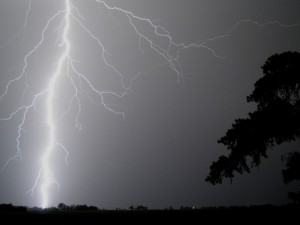
 Thunderstorms in Florida, and over its coastal waters, are frequently unpredictable. Even with the best weather reports, along with constant and accurate observations of climatic conditions, boaters can still be caught in open waters in a thunderstorm. Then, with or without a lightning protective system, it is critical to take additional safety precautions to protect the boat’s passengers.
These precautions during a thunderstorm are:
• Stay in the center of the cabin if the boat is so designed. If no enclosure (cabin) is available, stay low in the boat. Don’t be a “stand-up human” lightning mast!
• Keep arms and legs in the boat. Do not dangle them in the water.
• Discontinue fishing, water skiing, scuba diving, swimming or other water activities when there is lightning or even when weather conditions look threatening. The first lightning strike can be a mile or more in front of an approaching thunderstorm cloud.
• Disconnect and do not use or touch the major electronic equipment, including the radio, throughout the duration of the storm.
• Lower, remove or tie down the radio antenna and other protruding devices if they are not part of the lightning protection system.
• To the degree possible, avoid making contact with any portion of the boat connected to the lightning protection system. Never be in contact with two components connected to the system at the same time. Example: The gear levers and spotlight handle are both connected to the system. Should you have a hand on both when lightning strikes, the possibility of electrical current passing through your body from hand to hand is great. The path of the electrical current would be directly through your heart–a very deadly path!
• It would be desirable to have individuals aboard who are competent in cardiopulmonary resuscitation (CPR) and first aid. Many individuals struck by lightning or exposed to excessive electrical current can be saved with prompt and proper artificial respiration and/or CPR. There is no danger in touching persons after they have been struck by lightning.
• If a boat has been, or is suspected of having been, struck by lightning, check out the electrical system and the compasses to insure that no damage has occurred
Lightning Facts:
Florida averages more than ten deaths and thirty injuries from lightning per year. Approximately fifty percent of the deaths and injuries occur to individuals involved in recreational activities, and nearly forty percent of those are water-related: boating, swimming, surfing, and others. Most lightning strikes occur in the afternoon–70 percent between noon and 6:00 p.m.
Watch for the development of large well-defined rising cumulus clouds. Once they reach 30,000 feet the thunderstorm is generally developing. Now is the time to head for shore.
As the clouds become darker and more anvil-shaped, the thunderstorm is already in progress. Watch for distant lighting. Listen for distant thunder. You may hear the thunder before you can see the lightning on a bright day. Seldom will you hear thunder more than five miles from its source. That thunder was caused by lightning 25 seconds earlier. The sound of thunder travels at one mile per five seconds.